
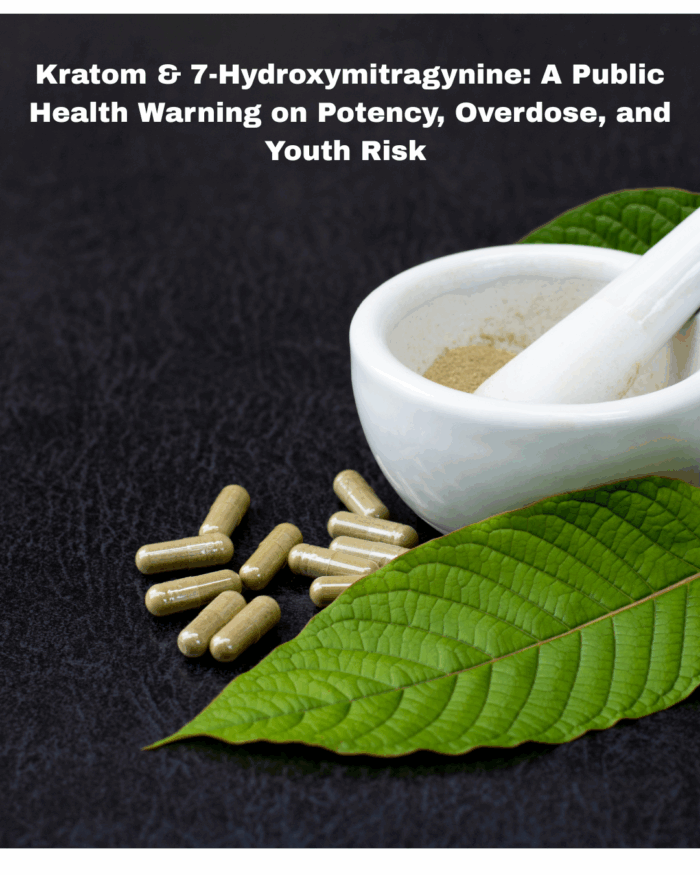
Kratom & 7-Hydroxymitragynine: A Public Health Warning on Potency, Overdose, and Youth Risk
⚠️ Strong Public Health Warning
Kratom and 7-OH are not safe alternatives to opioids. These substances are unregulated, highly addictive, and potentially lethal, especially when mixed with other drugs. The FDA has issued multiple warnings about fruit-flavored 7-OH products being sold in vape shops, gas stations, and online, often targeting children and teens with misleading packaging.
There are no FDA-approved uses for kratom or 7-OH. These substances are not safe dietary supplements, and their use has been linked to seizures, liver damage, respiratory depression, and death.
Potency and Comparison to Opioids
|
Compound |
Potency vs. Morphine |
Key Risks |
|
7-OH |
13–46× |
Respiratory depression, addiction, withdrawal |
|
Morphine |
1× |
Regulated, addictive, overdose risk |
|
Fentanyl |
50–100× |
Extremely potent, high overdose risk |
Youth and Teen Use: A Growing Concern
Kratom use among teens is rising, especially in high school and college students who use it for studying, anxiety, or energy.
7-OH products are sold as gummies, shots, and even ice cream cones, making them especially appealing to children and adolescents.
Less than 0.5% of teens (ages 12–17) report using kratom, but experts warn this number is likely underreported due to lack of drug testing and awareness.
Symptoms of teen kratom addiction include mood swings, anxiety, depression, muscle aches, runny nose, insomnia, and withdrawal symptoms similar to opioids.
Emergency Room Visits and Overdose Statistics
4,233 EMS encounters for kratom/7-OH overdoses were reported between Jan 2023–Apr 2025.
1,690 poison center calls in the first 7 months of 2025 alone.
165 cases involved 7-OH alone, with 35% resulting in serious health problems and 67% requiring hospital treatment.
Long-Term Health Effects
Liver and kidney damage
Cognitive impairment and emotional blunting
Sexual dysfunction and hormonal imbalances
Psychological and physical dependence
Overdose Treatment Options
Naloxone (Narcan)
Can reverse respiratory depression caused by 7-OH.
Not always effective due to kratom’s non-opioid receptor activity.
Supportive Care
Oxygen, IV fluids, sedation, and cardiac monitoring.
Withdrawal Management
Buprenorphine and methadone have been used successfully in kratom-dependent patients.
Regulatory Action
In July 2025, the FDA recommended classifying 7-OH as a Schedule I controlled substance, citing high abuse potential, no medical use, and rising youth exposure and overdose deaths.
Conclusion: A Call to Action
Kratom and 7-OH are not safe, especially for children and teens. Their unregulated availability, deceptive marketing, and opioid-like effects make them a serious public health threat. Parents, educators, and healthcare providers must stay informed and vigilant.
If you suspect a child or teen is using kratom or 7-OH, seek help from a medical professional or call the Poison Help Line at 1-800-222-1222.