
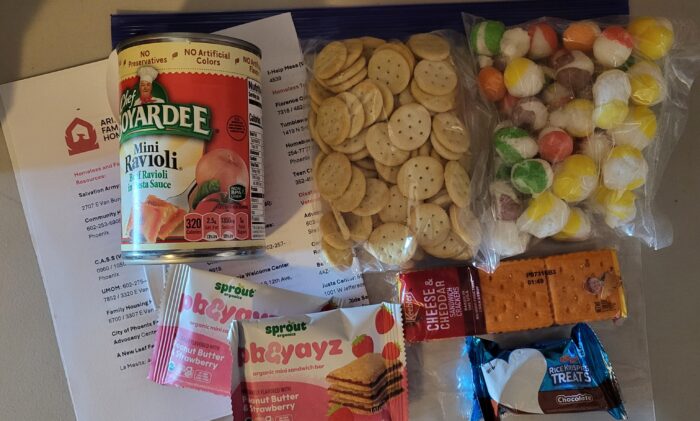
Rising Hunger Among Unsheltered Neighbors in the Communities We Serve
Recent changes to the Supplemental Nutrition Assistance Program (SNAP), enacted through the One Big Beautiful Bill Act of 2025, have had an immediate and visible impact on the unsheltered communities served by Arizona’s Family to the Homeless (AZFH). The expanded work requirements and removal of long‑standing exemptions for people experiencing homelessness have resulted in a growing number of AZFH clients losing or exhausting their SNAP benefits.
For many unsheltered neighbors, SNAP was their only consistent source of food. As benefits are terminated after just three months for those unable to meet or document work requirements, AZFH Mobile Outreach teams are witnessing a sharp rise in hunger, food insecurity, and desperation in the field.
What AZFH Mobile Outreach Is Seeing
Hunger Rising Across Unsheltered Camps and Communities
AZFH outreach teams are encountering:
- Individuals who previously relied on SNAP but now report having no food for multiple days
- Increased requests for food during outreach stops
- Greater dependency on Mobile Outreach for daily nourishment, not just supplemental support
These outcomes align with statewide estimates showing over 124,000 Arizonans at risk of losing SNAP, many of whom are experiencing homelessness and face significant barriers to compliance with work requirements.
Transportation Barriers Prevent Access to Food Banks and Pantries
Many of the unsheltered neighbors AZFH serves:
- Do not have vehicles
- Cannot afford public transportation
- Live in remote or hidden areas far from fixed food distribution sites
As a result, even when food pantries or meal services are available, clients are often physically unable to reach them. The loss of SNAP eliminates the limited flexibility they once had to obtain food closer to where they sleep or stay during the day.
Traditional Food Assistance Often Fails the Unsheltered
When clients are able to access food banks or pantries, much of the food provided:
- Requires refrigeration
- Requires cooking appliances
- Comes in bulk packaging unsuitable for people living outdoors
For individuals living in tents, vehicles, or encampments without electricity, refrigeration, or cooking facilities, these foods are impossible to safely store or prepare. This disconnect leaves many unsheltered individuals technically “served” but still going hungry.
Why AZFH Provides Ready‑to‑Eat Meal Kits
In response to these realities, AZFH Mobile Outreach prioritizes ready‑to‑eat meal kits designed specifically for people without:
- Refrigeration
- Cooking facilities
- Safe food storage
These kits are often the only usable food option for individuals living unsheltered.
Essential Components of AZFH Meal Kits
The most critical items include:
- Pop‑top canned foods (no can opener required)
- Tuna and chicken in pouches
- Fruit and vegetables in cups or pouches
- Cup noodles and shelf‑stable meals
- Shelf‑stable snacks and hydration items
These foods provide immediate nourishment, reduce foodborne illness risk, and allow clients to eat safely wherever they are.
Why AZFH Must Purchase These Items
Unlike bulk pantry donations, the core components of AZFH meal kits:
- Are rarely donated
- Are not donated in the quantities required for sustained outreach
- Must meet specific criteria for safety, accessibility, and portability
Pop‑top cans, protein pouches, and single‑serve shelf‑stable foods are among the most requested but least donated food items nationwide, particularly for programs serving unsheltered populations. As SNAP losses increase demand for Mobile Outreach meals, AZFH must purchase these items directly in order to maintain consistent, dignified support.
The Growing Burden on Mobile Outreach
SNAP historically provides the majority of food assistance in the community—for every one meal a food pantry provides, SNAP provides approximately nine—meaning no nonprofit can fully replace the loss of benefits through donations alone. As SNAP access shrinks:
- Outreach demand increases
- Food costs rise
- Programs like AZFH Mobile Outreach become lifelines rather than supplements
Without sustained funding for ready‑to‑eat meal components, unsheltered individuals face deeper hunger, declining health, and increased instability—making employment, recovery, and housing even harder to achieve.
Conclusion
The loss of SNAP benefits is not an abstract policy change for AZFH—it is a daily reality witnessed by outreach teams serving Arizona’s most vulnerable neighbors. Ready‑to‑eat meal kits are no longer optional; they are essential. AZFH’s commitment to purchasing and distributing these critical food items ensures that people experiencing homelessness can eat safely today, even as systemic supports are stripped away.
References
-
Maricopa Regional Continuum of Care. Point‑in‑Time Homelessness Count, annual report.
-
Arizona Department of Economic Security. State of Homelessness Services Annual Report (2024).
-
City of Mesa. Snapshot on Homelessness in Mesa data dashboard.
-
U.S. Department of Housing and Urban Development (HUD). Annual Homelessness Assessment Report (AHAR).
-
Arizona Department of Health Services. Extreme Heat and Public Health in Arizona.